
Taking Prescribed Opioids in Recovery: Why Honesty and Accountability Matter
When legitimate pain relief and addictive thinking become difficult to distinguish, trying to figure it all out alone can be dangerous.
A few weeks ago, I had oral surgery that left me in significant pain.
As someone in recovery from addiction, my initial plan was to manage the pain without opioids. But despite taking ibuprofen and acetaminophen, the pain became unbearable.
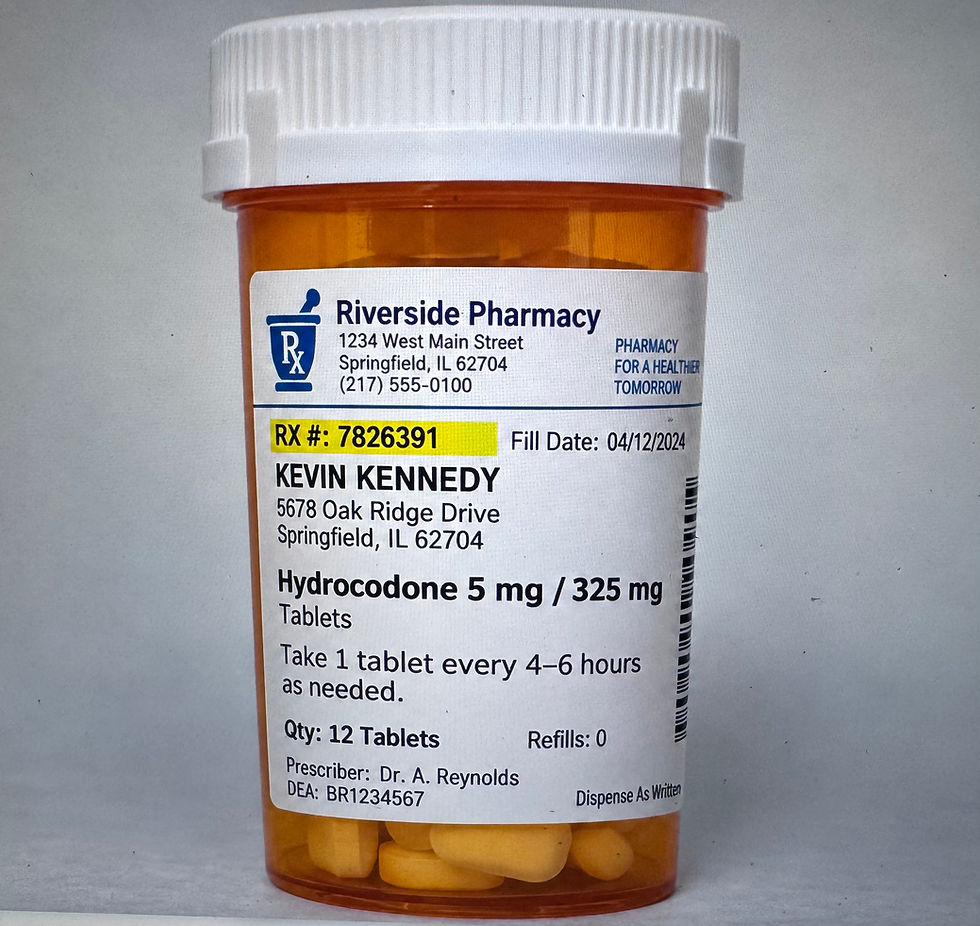
My oral surgeon prescribed hydrocodone.
And so began an experience that reminded me just how complicated taking opioid pain medication can be for someone in recovery.
Initially, there wasn't much to question. I was in tremendous pain, and the medication provided necessary relief.
But as the pain began to subside, the questions started.
Do I really need another dose?
Am I taking this because I'm still hurting, or because I enjoy the way it makes me feel?
Am I afraid the pain will come back, or am I looking for a reason to keep taking it?
The problem was that I couldn't confidently answer those questions.
And here's something important: I've been in recovery for years. I spent nearly a decade working as an addictions counselor, and today I own a recovery coaching practice.
None of that makes me immune to addictive thinking.
It doesn't mean I always have the answers. And it certainly doesn't mean I don't need help sometimes.
So I started talking.
I told my wife what was going on in my head. I talked to my sponsor. I admitted that I was questioning whether I'd really needed my most recent dose.
Eventually, I decided that I could manage the remaining pain without opioids, and I disposed of the medication.
But here's what matters most about that experience.
It wasn't the decision to stop taking the medication.
It was the decision to stop having the conversation exclusively with myself.
The problem with trying to figure it out alone
Addiction has a way of making rationalization sound remarkably reasonable.
And sometimes it is reasonable.
That's what makes situations like this so difficult.
I was legitimately in pain. The medication was prescribed by a medical professional. I was taking it as directed.
And I genuinely enjoyed how it made me feel.
All of those things were true simultaneously.
For someone with a history of addiction, that creates an uncomfortable gray area.
We can convince ourselves we need something when we don't. We can also become so afraid of relapse that we deny ourselves legitimate medical care.
Neither extreme is particularly helpful.
The goal isn't to prove how tough we are or how much pain we can endure.
The goal is to make thoughtful, informed decisions while recognizing that our own judgment may not always be enough.
That's where honesty and accountability come in.
Five principles for navigating prescribed opioids in recovery
There isn't a universal rule that works for everyone in recovery. Medical needs, addiction histories, and individual risks differ.
But there are several principles I believe are worth considering.
1. Be completely transparent with your medical providers.
If you're in recovery from substance use disorder, tell your doctors.
All of them.
Even if your addiction involved alcohol rather than opioids. Even if you've been sober for decades. Even if you're confident that prescription medication has never been a problem for you.
Your medical providers need an accurate picture of your history to help you make informed decisions.
That doesn't mean they'll automatically refuse to prescribe opioid pain medication.
And it doesn't mean you should refuse appropriate medical care.
It means you and your provider can have an honest conversation about the risks, benefits, and alternatives.
2. Recognize that sometimes opioids really are medically appropriate.
I want to be clear about something.
I do not believe people in recovery should have to suffer unnecessarily to protect their sobriety.
I've undergone several major surgeries over the years, including a three-level cervical spinal fusion and two rib resections.
Opioid pain medication was appropriate and necessary during those recoveries.
The decision to take prescribed opioids isn't inherently a failure of recovery.
If your medical provider believes opioid medication is appropriate, that recommendation deserves serious consideration.
Ask questions. Discuss alternatives. Explain your concerns.
Ultimately, the decision should be made collaboratively with your medical provider, based on your individual circumstances.
You don't need to prove your recovery by enduring avoidable pain.
3. Have a specific plan before taking the first dose.
This is something I would encourage anyone in recovery to discuss with their prescriber.
Instructions like "take 1–2 pills every 4–6 hours as needed" can leave a tremendous amount of room for interpretation.
And when you're experiencing pain, anxiety, and potentially the pleasurable effects of an opioid, that ambiguity can become problematic.
Ask your provider:
What dose should I start with, and under what circumstances should I take it?
How do I determine whether another dose is necessary?
How long should I expect to need this medication?
What nonopioid options can I use?
When should we reassess whether the medication is still necessary?
What should I do if I'm concerned about cravings or my motives for taking another dose?
The more specific the plan, the less room there is for negotiating with yourself.
The goal is to make as many decisions as possible before you're in pain and staring at a bottle of pills.
4. Build accountability into the process.
One of the things I did was give the medication to my wife, who is a registered nurse.
She held it and helped me manage my prescribed dosing schedule.
That was an intentional decision.
It created a layer of accountability and removed some of the temptation to make dosing decisions entirely on my own.
Not everyone has a spouse or family member who can help with this. And it may not be practical in every situation.
But if you have someone you trust who can safely secure and help manage your medication according to your prescriber's instructions, it's worth considering.
It's also important to discuss safe storage, potential interactions with other medications or alcohol, and whether you should have naloxone available in case of an overdose.
Accountability isn't about surrendering your autonomy.
It's about recognizing that additional safeguards can be valuable when the stakes are high.
5. Tell on yourself. Think out loud.
This is the most important one to me.
If you find yourself questioning whether you really need another dose, tell someone.
If you notice that you're looking forward to the feeling the medication produces, tell someone.
If you're trying to justify taking it sooner than planned, tell someone.
If you're experiencing cravings, hiding your thoughts, or feeling uncomfortable about your relationship with the medication, tell someone.
And you don't have to wait until something has gone wrong.
Talk to your doctor. Your sponsor. Your therapist. Your recovery coach. Your spouse or another trusted person.
Say exactly what's going through your head.
Not the cleaned-up version. Not the version that makes you sound responsible or in control.
The uncomfortable version.
The version that makes you wonder whether you're rationalizing.
You don't necessarily need to know what to do before you make that call.
In fact, that's often the entire point.
And if you're questioning whether to continue the medication, involve your prescriber in reassessing your pain-management plan rather than making medical decisions based solely on fear or cravings.
Recovery doesn't mean having all the answers.
One of the things I've learned through my own recovery, and through years of working with people struggling with addiction, is that honesty can be harder than abstinence.
It's one thing to avoid taking a substance.
It's another to acknowledge that you want it.
To admit that you're enjoying the feeling.
To say out loud that you're not entirely sure what your motives are.
That takes humility.
It also takes a willingness to be vulnerable and to let other people see that you don't have everything figured out.
I could have kept the entire debate about my pain medication to myself.
After all, I was taking it as prescribed. I hadn't done anything wrong.
But something about the experience made me uncomfortable, and I knew better than to ignore that feeling.
So I talked about it.
And the relief I felt afterward wasn't just about no longer having access to the medication.
It was about no longer carrying the uncertainty alone.
Recovery isn't about becoming immune to temptation, rationalization, or fear.
It's about developing the willingness and the tools to respond differently when those things show up.
Sometimes that means picking up the phone.
Sometimes it means admitting you're not sure.
And sometimes the most important thing you can do for your recovery is let someone else hear what's happening inside your head.
You don't have to figure everything out alone.


Comments